
What Should You Pack When Going Kayaking?
Before going kayaking, everyone wonders what to pack, what’s essential, and what they might be better off leaving behind.
Are you planning a kayaking trip but aren’t sure what to pack?
This article will answer all your questions. It’s not just about enjoying the trip, but also about preparing properly so that you have a plan for any unforeseen events. The duration of your trip determines what items you should take with you. A day trip requires less careful consideration when selecting essentials. If you’re staying overnight at a campsite, the preparations are quite different. You’ll need to ensure you have sufficient supplies of food, water and equipment. Read the full list below or skip straight to the section that applies to you.
One-day trips
So, what items are needed for even the shortest one-day trips? This list should be particularly useful for beginner kayakers, but it’s also essential when putting together a packing list for an overnight trip. When kayaking for a single day, you should only take the bare essentials. Unnecessary items can make the preparation process more difficult.
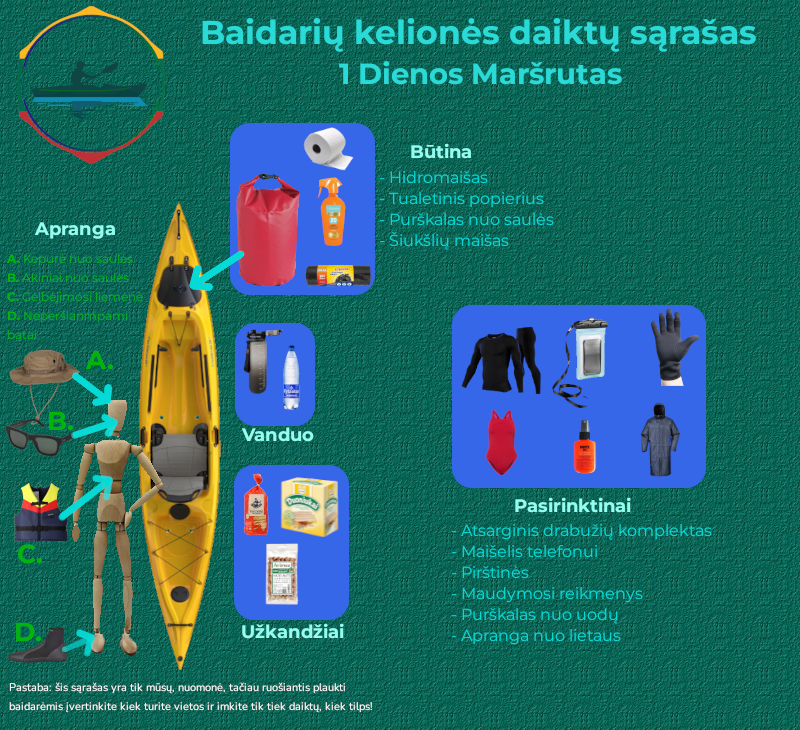
Essential items for a day trip without an overnight stay:
- A dry bag. This is usually included in the kayak hire price, but it’s worth checking. A well-sealed dry bag will ensure your belongings are 100% protected from water. Keep your most important items, such as: the kayak paddle, a change of clothes, your mobile phone and your wallet, in the dry bag. You can put the items you plan to keep close to you into a few bin bags. That way, they’ll be easily accessible and won’t get wet.
- Life jacket. Our partners always include a life jacket in the kayak hire price. If you’re kayaking elsewhere, check whether the kayak hire company will provide a life jacket. It ensures that your head stays above water in the event of a capsize.
- Footwear for wading. In case you need to carry your kayak over an obstacle, make sure you have suitable footwear. Avoid slip-on sandals, as you’ll very easily lose them in the river current or in the mud.
- Water. Physical activity naturally requires more energy and fluids. Make sure you have refreshing drinks with you. (Lemonade and coffee are dehydrating.)
- Sun protection. Even if you’re not tanned, a day in the blazing sun can leave its mark. Essential protective measures: a hat, sunglasses and sun cream.
- A bin bag. It’s very important to keep the countryside clean – all rubbish must be bagged up. Lithuania needs more people who not only pick up their own rubbish, but also that of others.
- Toilet paper. Important even for short trips.
Items that travellers themselves need to assess whether they require when kayaking on a one-day route without an overnight stay:
- Gloves made of thicker fabric. These will help prevent chafing and cuts on your hands. Very often, inexperienced travellers develop blisters on longer kayaking routes.
- A waterproof bag for mobile phones. You can keep your phone in a dry bag, but to make it easier to access, you should buy a waterproof bag or ask the kayak hire company.
- Insect repellent. Insects are a common occurrence near water, so make sure you have repellent or other protective measures to hand.
- Snacks. To keep your energy levels up – nuts, fruit and energy bars.
- A spare set of clothes. Paddling is inevitably damp, so have a change of clothes ready for any unexpected situations. If you’re swimming in warm weather and are prepared to get wet, you can swim without a spare set of clothes.
- Rainwear. It’s a good idea to have a waterproof jacket in case of unexpected rain.
- Swimming essentials. If you’re planning to go for a swim, don’t forget your swimming costume and a towel.
You can download a list of these items at the bottom of the article.
When sailing with an overnight stay at a campsite
For longer trips where you plan to stay overnight, it’s important to pack extra items. If you’re on a trip with just one overnight stay, it’s worth checking whether you can leave your overnight gear at the campsite. You can do this by phoning or otherwise contacting the kayak hire company.
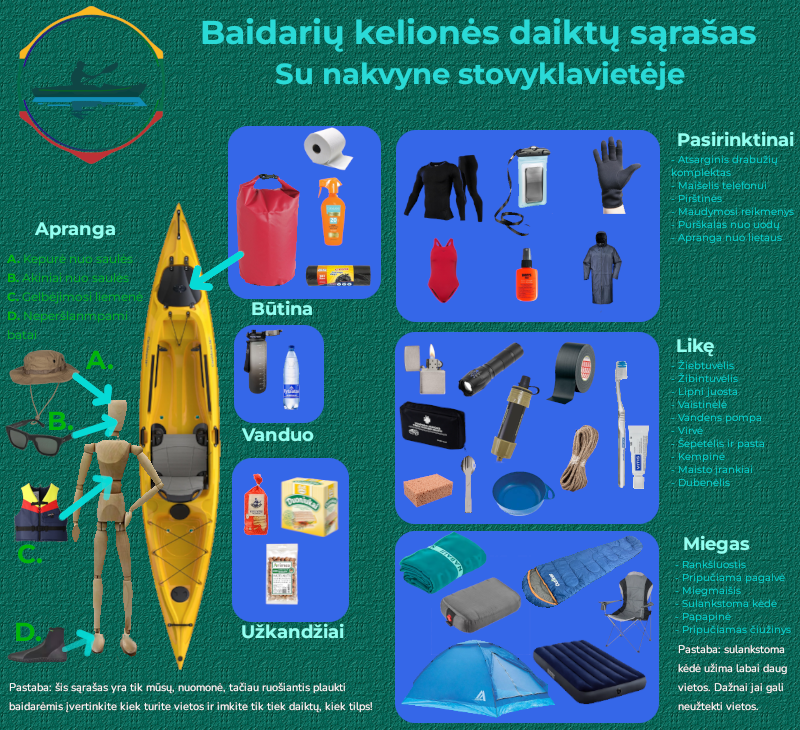
Essential items for a trip involving an overnight stay at a campsite:
- A tent and a sleeping bag. Choose lightweight and compact options.
- A sponge. A sponge is the easiest way to remove water from the kayak. You can also use it to wash the kayak or remove mud. Frequent travellers should consider purchasing a water pump.
- Cooking utensils and crockery. Convenient and lightweight items for preparing food.
- Toiletries. Toothbrush, toothpaste, soap.
- Towel. A thin, quick-drying towel is the ideal choice.
- First-aid kit. It is essential to have a first-aid kit containing basic first-aid supplies.
- Food and drink. Plan your food according to the duration of the trip and your needs.
- All essential items listed in the one-day route checklist.
Items that travellers must assess for themselves when paddling a route involving an overnight stay at a campsite:
- A water filter or water purification tablets. Depending on how long you’ll be paddling, carrying all your water in the kayak may not be practical.
- Campfire equipment. Matches, a lighter, a campfire pot, an axe. This depends on what equipment you’ll find at the campsite.
- Duct tape. The ideal solution for quickly repairing a punctured kayak or other equipment.
- Rope. Useful for pulling the kayak clear of various obstacles or helping another crew.
- Torch. Useful for seeing in the dark.
- Folding chair. Although it takes up a lot of space, it may be worth it to make the most of your memories whilst sitting comfortably by the campfire.
- Inflatable mattress. This will ensure a comfortable night’s sleep.
- Pillow. Depending on the space available, taking a pillow on a kayaking trip can be a really good idea. To save space, travellers often use clothes or other items they have with them as a substitute for a pillow.
You can download a list of these items at the bottom of the article.
Paddling with an overnight stay at a farmstead
Staying at a farmstay is a wonderful way to paddle longer routes whilst enjoying a comfortable night’s sleep and travelling with less luggage. Staying at a farmstay will allow you to spend more time socialising and enjoying other activities. However, you will still need to pack more items than when kayaking a day trip.
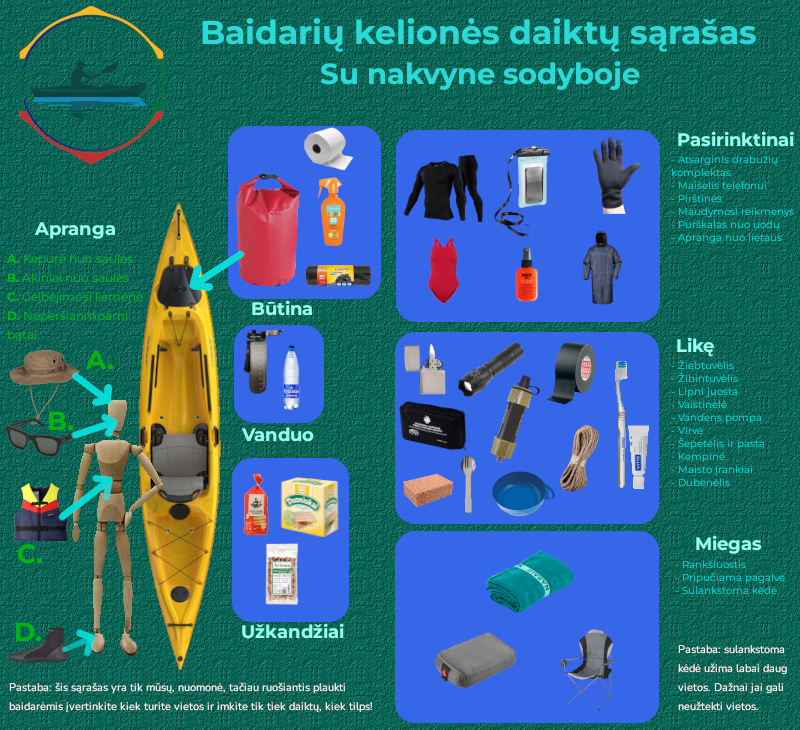
Essential items for a trip with an overnight stay at a farmstead:
- Toiletries. Toothbrush, toothpaste.
- Towel. A thin, quick-drying towel is the ideal choice.
- Cooking utensils and crockery. Convenient and lightweight utensils for preparing food.
- First-aid kit. It is essential to have a first-aid kit containing basic first-aid supplies.
- Personal items. Medicines, creams and other items.
- All the essential items listed for a one-day route.
Items which travellers must assess for themselves when undertaking a route involving an overnight stay at a farmstead:
- A water filter or water purification tablets. Depending on how long you’ll be paddling, carrying all your water in the kayak may not be practical.
- Campfire equipment. This depends on what equipment is available at the farmstead. It is advisable to bring a lighter.
- Duct tape. The ideal solution for quickly repairing a punctured kayak or other equipment.
- Rope. Useful for pulling the kayak clear of various obstacles or helping another crew. You can also use the rope for other tasks, such as carrying the kayaks.
- Inflatable cushion. When paddling long distances, you may start to feel back fatigue. You can place the cushion under your bottom or use it as back support. This will help reduce any discomfort caused by sitting for long periods.
- Torch. It’s useful to have one for seeing in the dark.
- Folding chair. Although it takes up a lot of space, it can provide a comfortable place to rest.
You can download a list of these items at the bottom of the article.
What items and clothing do you need when sailing in cold weather?
The main challenge during the cold season is the low water temperature. You need to think very carefully about your clothing and your plan in the event of a capsize. I explore this topic in more detail in my article on spring, where you’ll find recommended clothing for the colder months and other useful tips.
Conclusions
Only careful preparation for a kayaking trip will ensure you have the best possible experience. Choose the right equipment, taking into account the duration of the trip and the weather conditions. A trip involving an overnight stay at a campsite requires the most preparation. Staying at a farmstead or opting for a day trip means you’ll spend less time preparing and more time relaxing. Once you’ve carefully prepared for your planned route, all that’s left is to enjoy a wonderful time in the great outdoors!
Download the list in PDF format
Sources:
https://www.baidares.com/pasiruosimas-kelionei-baidaremis/
https://www.baidariu.lt/naudinga/ka-pasiimti-i-baidare/
https://www.eaglecreek.com/blogs/articles/going-kayaking-trip-here-s-what-pack