
Kayaking in Spring
As nature comes to life, the desire to spend free time by the water grows. In this article, we look at the unique aspects of spring kayaking, recommended rivers and tips for safe kayaking.
Nature, as it comes back to life, beckons people to visit it.
Kayaking is usually seen as a way of spending one’s free time in the summer. Many people don’t even realise that spring, autumn or winter can offer even more thrilling experiences than a paddle on a warm summer’s day.
What makes kayaking in spring so special?
Every season has its own unique characteristics. Spring is characterised by the retreating winter, which leaves behind meltwater. This meltwater flows into Lithuania’s rivers, reviving them from their winter slumber.
The extremes of spring rivers
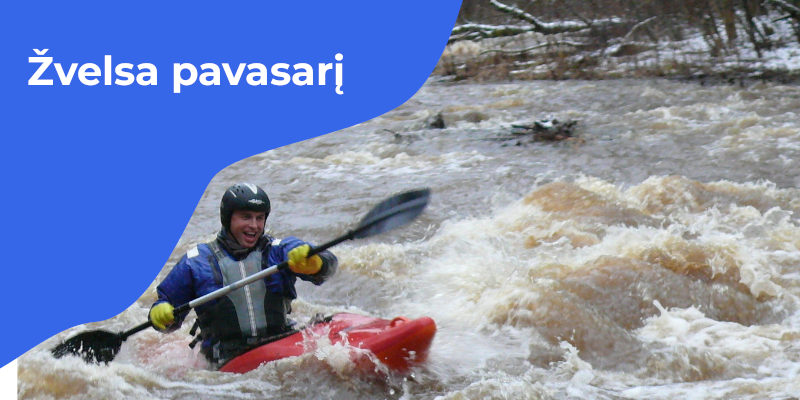
The rushing water causes river levels to rise sharply. The higher water levels make the river flow faster, sweeping up more branches and other obstacles from the banks. This means that kayaking on swollen rivers becomes more dangerous. However, this does not stop water tourists from enjoying the revitalised currents of Lithuania’s rivers.
Alone on the river
In recent years, kayaking has rapidly grown in popularity. On rivers that are frequently paddled, there are certainly plenty of kayaking groups in the summer. Therefore, for those seeking more peace and quiet, it is advisable to go kayaking at other times of the year. Spring is particularly well suited for this. The exceptional conditions create opportunities to enjoy kayaking on the river without other people or anglers around.
Nature Awakening

Spring in nature is a time of rebirth. After their winter slumber, many of Lithuania’s animals awaken. Trees also begin to draw their sap upwards from the roots, and later sprout buds and unfurl their leaves. The cold gives way to the gentle warmth of spring, which in turn leads to increased activity among aquatic animals. People wishing to start the new year with vigour should spend at least a day out in the reawakening countryside to recharge their batteries.
Intense sensations
Lithuania has never been known for rivers with strong currents. This changes in spring. Small streams, which are impassable in summer, come to life in winter. These streams become the equivalent of mountain rivers. The rising water also creates quite a few obstacles: rapids, fords, fallen branches and eddies. Paddling in spring certainly provides plenty of adrenaline, which is why some people value this time of year for that reason alone.
Cold spring water
The emergence of the spring sun can be deceptive. In spring, the water in rivers is really cold, so it’s very important to prepare properly. When paddling on extreme rivers, always expect to get wet. Even if you’re an experienced kayaker, things can go wrong. Always have a backup plan in case your kayak capsizes or your paddle breaks. It’s important to remember to dress appropriately. You can find more information in the advice section.
Which rivers are worth paddling on in spring?
Spring is a great opportunity to paddle on rivers that are too shallow in summer. Below, I’ll list all the exceptional spring rivers by ethnographic region. Fasten your life jackets and let’s carry on.
Aukštaitija
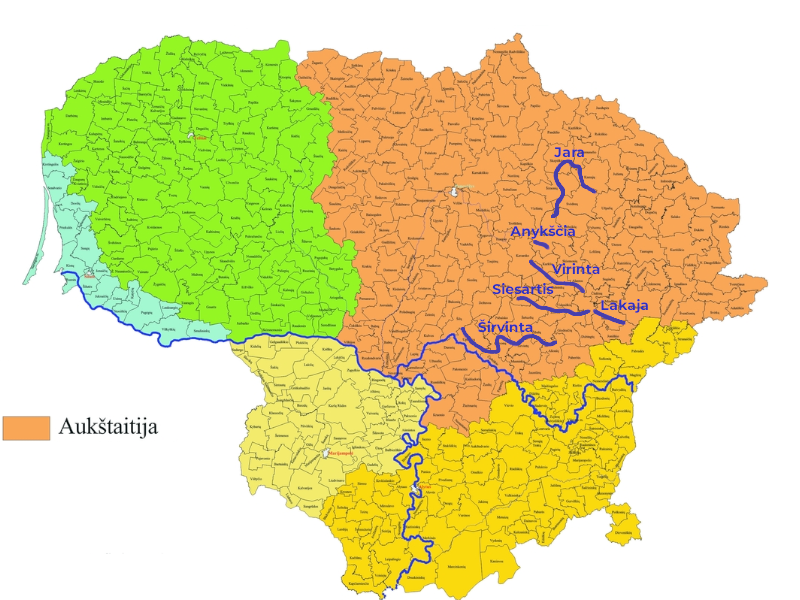
We certainly have plenty of spring rivers in Aukštaitija. Here, you can paddle through forests or across cultivated fields. Our recommended spring rivers, with their average gradients indicated:
- Anykšta – 1.90 m/km
- Virinta – 1.48 m/km
- Siesartis (flows into the Šventąja) – 1.45 m/km
- Širvinta (flows into the Šventąja) – 0.88 m/km
- Jara – 0.86 m/km
- Kiauna – 0.69 m/km
- Lakaja – 0.52 m/km
Samogitia
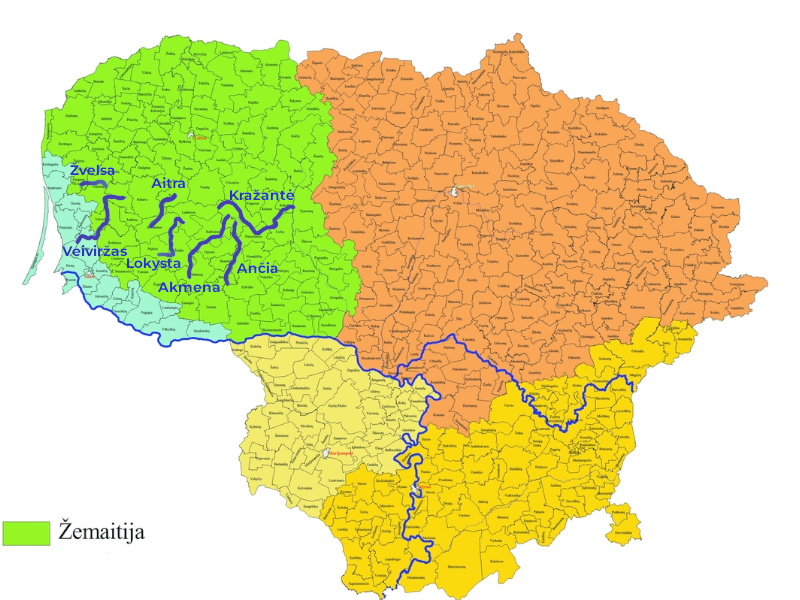
The Samogitian Uplands create exceptional conditions for rivers to resemble mountain rivers in spring. They usually make the most of this opportunity. Among the most extreme are the following; the average gradient of the river is given after the dash:
- Žvelsa – 2.61 m/km
- Aitra – 2.42 m/km
- Ančia – 1.91 m/km
- Akmena – 1.86 m/km
- Lokysta – 1.83 m/km
- Veiviržas – 1.55 m/km
- Kražantė – 1.03 m/km
Suvalkija
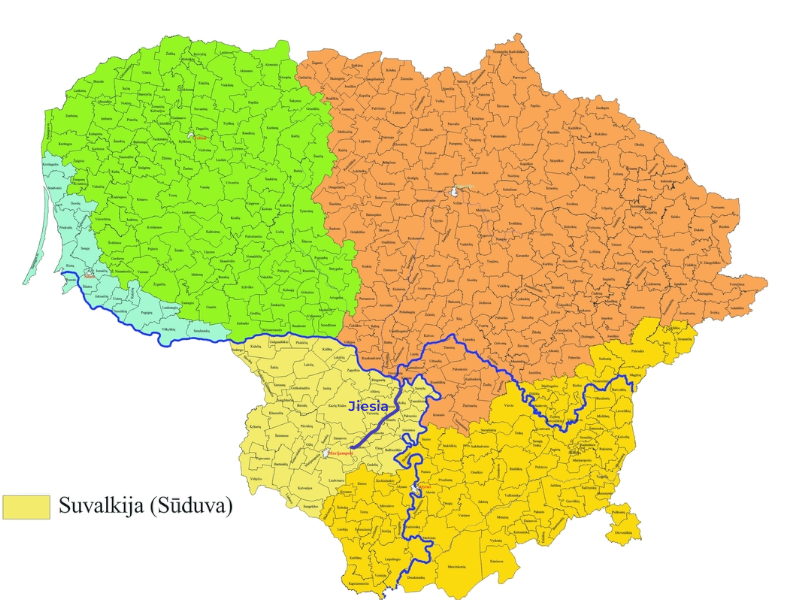
Unlike Samogitia, Suvalkija is a region of plains. The only river here that has carved out a fairly steep channel over thousands of years is the Jiesia:
- Jiesia – 1.32 m/km
Dzūkija
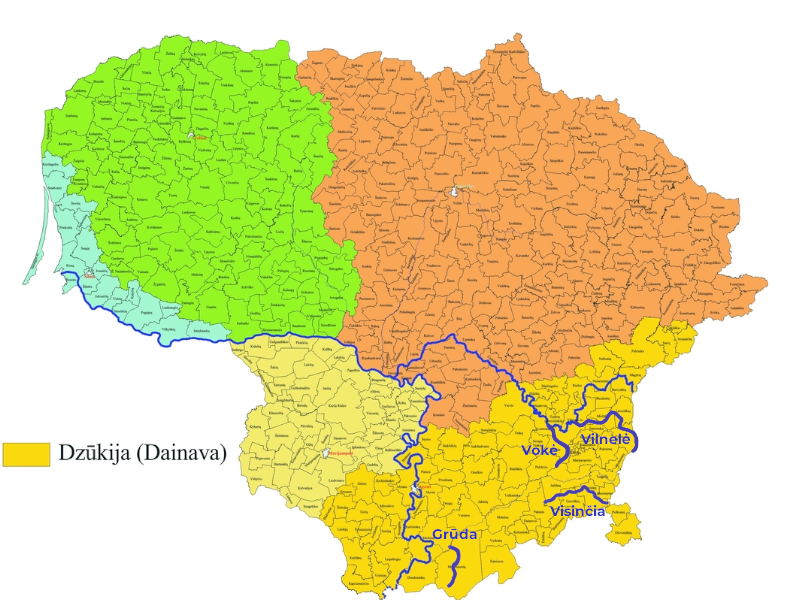
This popular kayaking region in summer also has plenty to offer in spring. Here are our recommended rivers for kayaking in spring with a moderate gradient:
- Vilnelė/Vilnia – 1.53 m/km
- Vokė – 1.47 m/km
- Visinčia – 1.17 m/km
- Grūda – 0.95 m/km
Tips for kayaking in spring
Whilst in summer you need to focus more on protection from insects and the sun whilst kayaking, in spring you need to prepare more thoroughly. Poor preparation and a lack of knowledge, especially in spring, can have serious consequences. Let’s start with clothing.
Don’t get cold while kayaking: what is the right clothing for spring kayaking?
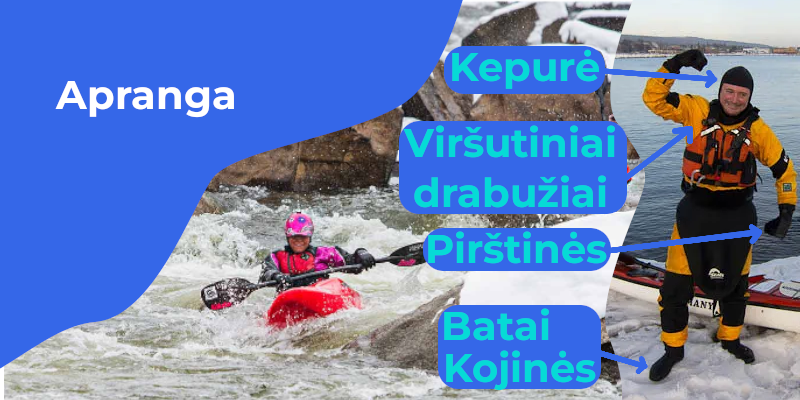
As I’ve already mentioned, warm spring days can be misleading. Always dress for the water temperature, not the air temperature. The essential items of clothing are as follows:
- A hat – on a wild river, where there’s a chance you might capsize several times, a neoprene hat would be useful. On calmer rivers, it’s a good idea to have a simple, warm hat.
- Outerwear – there are two options: 1) if you expect to capsize – a wet or dry suit; 2) several layers of clothing. A wet or dry suit is designed to retain heat and be water-resistant. Paddlers who frequently go on kayaking trips during the colder months should invest in a comfortable suit. A dry suit is recommended for long trips, but on very fast-flowing rivers where there is a high likelihood of capsizing, a wet suit is preferable. Whichever option you choose, it is still essential to have a second set of clothes, which should be kept in a waterproof bag. Although a wet or dry suit will accompany you throughout the trip, once you’ve finished paddling, you should change into your usual clothes.
- Gloves – you’ll inevitably get wet whilst paddling. If you want to paddle comfortably for the whole trip without your hands getting cold, make sure you have suitable gloves. With a wet or dry suit, you should wear neoprene gloves for their waterproof properties.
- Boots – in spring, rivers often contain obstacles that cannot be paddled through. You may frequently need to carry your kayak over an obstacle, so waterproof boots are an essential part of your kit.
- Socks – the choice depends on the boots you’ve chosen. Neoprene socks can be worn with standard shoes. Thermal socks can be worn with waterproof shoes. A comfortable spring paddle requires warm legs, and especially warm feet.
Don’t forget to pack these items for your spring kayaking trip
All the essentials are a must for every season and are described in our article ‘What to Pack for a Kayaking Trip?’. To ensure you stay comfortable whilst paddling on a cold spring day, we recommend bringing:

- A hot drink in a thermos flask or some hot soup.
- Snacks to keep your energy levels up.
- A spare set of clothes.
A hot drink will help you warm up during every break. Snacks provide the body with energy, which it quickly uses to generate heat. An extra set of clothes is essential when paddling in cold weather, as it will keep you warm in the event of a capsize.
What dangers lurk in spring rivers?
The strong current of a spring river creates dangerous conditions for inexperienced water travellers. I’ll briefly outline the main hazards and how to avoid them.
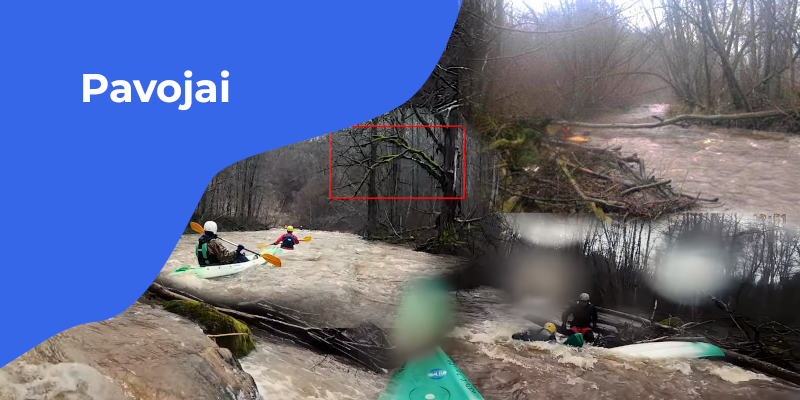
- Broken branches. The rising river current gathers up all the branches that lay on the bank during winter and carries them downstream. Sometimes branches can become lodged in the riverbed. To avoid them, it is important to keep an eye out and plan your route ahead.
- Falling trees. Old branches may snap in strong winds. Assess the wind strength and choose your route accordingly.
- Capsized kayak. An obstacle or a strong current can capsize even larger kayaks. Have a plan for what to do in such a situation. The best solution is to paddle to the nearest bank.
Don’t paddle alone!
Spring rivers offer indescribable thrills, but they also carry the risk of an accident. Paddling in a group of at least two kayaks will ensure prompt assistance in the event of an accident. If you can’t find anyone to paddle with, you can contact us or other groups of travellers. This is a great way to meet like-minded people with whom you can organise future trips. Safety comes first!
Conclusions
Kayaking in spring provides a burst of energy to start the year and plenty of adrenaline. It’s no wonder that experienced kayakers choose this time of year. However, it’s important to make sure you have the right clothing, equipment and knowledge about Lithuania’s rivers as they come back to life. Paddle responsibly and enjoy unforgettable trips down the spring rivers. And don’t forget to tell others all about them!
Sources:
https://www.delfi.lt/keliones/naujienos/astriu-pojuciu-megeju-ledinis-vanduo-negasdina-43588769
https://bestmarineandoutdoors.com/blogs/news/what-to-wear-kayaking-spring-edition
https://abrokenbackpack.com/what-to-wear-kayaking-in-spring/
https://brooklynkayakcompany.com/blogs/our-blog-2/what-to-consider-when-kayaking-in-the-spring